
15/09/2025 – international day of democracy
we see democracy as a value and a practice, not as a system.*
Monday, the 15th september, we will gather from 19:00 – 21:30 at the GC De Rinck – Café (1st floor), to practice and cocreate democracy in NL-FR-EN, sharing our stories and inspiration, to strengthen our kinship and our capacity to move as a collective. Individualism needs to be deconstructed and transformed to access democracy. Democracy does not need heroes, it needs many people who move together intentionally, with awareness.
On this international day, we insist on making the connection between democracy and the ongoing genocides. The strength of democracy has a direct impact on processes that lead to genocide**. In countries where democracy is a strong common value for all citizens (including politicians), political actions against genocides would have already happened.
We are creating this space, so we can practice democracy together. In this space, we meet and learn together how it feels and what it means to hold space for differences, tensions and triggered values, without losing our human connection.
Program
EN-FR-NL
19:00 Welcoming moment: share what you like to share
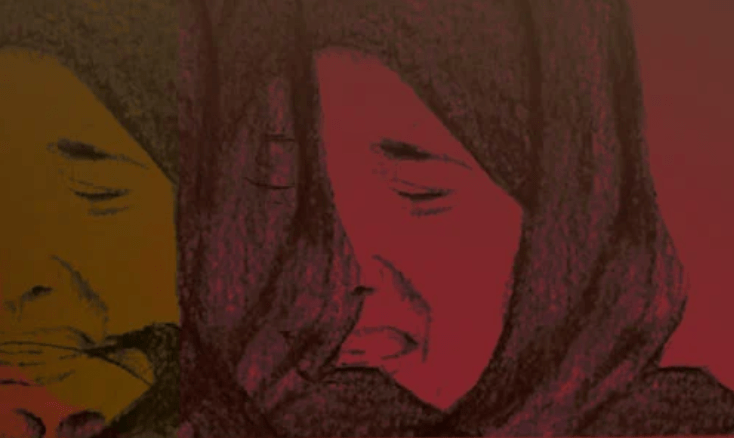
19:20 Communal watching of the trailer of the film “Where olive trees weep” and extracts of the online gathering “We will not look away”.
20:00 Welcoming and sharing your impressions, inspiration and stories, in a space held by Resmove facilitators.
21:00 Gathering conclusions, ideas for local or global actions and how to find support or join collective action.
* “Democracy is a universal value based on the freely-expressed will of people to determine their own political, economic, social and cultural systems, and their full participation in all aspects of life. (…) In September 1997 the Inter-Parliamentary Union (IPU) adopted a Universal Declaration on Democracy.[2] That Declaration affirms the principles of democracy, the elements and exercise of democratic government, and the international scope of democracy. The international conferences on new and restored democracies (ICNRD process) began in 1988 under the initiative of President Corazon C. Aquino of the Philippines after the so-called peaceful “People Power Revolution” overthrew the 20-year dictatorship of Ferdinand Marcos. At the suggestion of the IPU, 15 September, the date of the Universal Declaration on Democracy, was chosen as the day when the international community would celebrate each year the International Day of Democracy.” Source https://en.wikipedia.org/wiki/International_Day_of_Democracy
** Genocide Watch – the ten stages of genocide. This processual model demonstrates that there is a logic to the genocidal process, though the relationships between the processes are not linear. The “stages” are processes that occur simultaneously. Source: https://www.genocidewatch.com/tenstages
By helping us understand the logic of genocide, people can see the early warning signs of genocide and know when it is coming. Leaders can design policies to counteract the forces that drive each of the stages. The model has proven useful to look for these processes because they help us see when genocide is coming and what governments can do to prevent it.
- The first process is Classification, when we classify the world into us versus them.
- The second is Symbolization, when we give names to those classifications like Jew and Aryan, Hutu and Tutsi, Turk and Armenian, Bengali and Pashtun. Sometimes the symbols are physical, like the Nazi yellow star.
- The third is Discrimination, when laws and customs prevent groups of people from exercising their full rights as citizens or as human beings.
- The fourth is Dehumanization, when perpetrators call their victims rats, or cockroaches, cancer, or disease. Portraying them as non-human makes eliminating them a “cleansing” of the society, rather than murder. These first four processes taken together result in what James Waller calls “Othering.”
- The fifth process is Organization, when hate groups, armies, and militias organize.
- The sixth is Polarization, when moderates are targeted who could stop the process of division, especially moderates from the perpetrators’ group.
- The seventh process is Preparation, when plans for killing and deportation are made by leaders, and perpetrators are trained and armed.
- The eighth process is Persecution, when victims are identified, arrested, transported, and concentrated into prisons, ghettos, or concentration camps, where they are tortured and murdered.
- The ninth process is Extermination, what lawyers define as genocide, the intentional destruction, in whole or in part, of a national, ethnic, racial, or religious group.
- There is tenth process in every genocide: Denial. Denial is a continuation of a genocide, because it is a continuing attempt to destroy the victim group psychologically and culturally, to deny its members even the memory of the murders of their relatives.
 Resilience Movement